5 posts tagged with "Guides"

Getting started, how-to guides, application patterns, and best practices.

View All Tags

Real-Time Multi-Dimensional Unique Visitor Deduplication in Practice

Yang Wang
Apache Fluss Committer

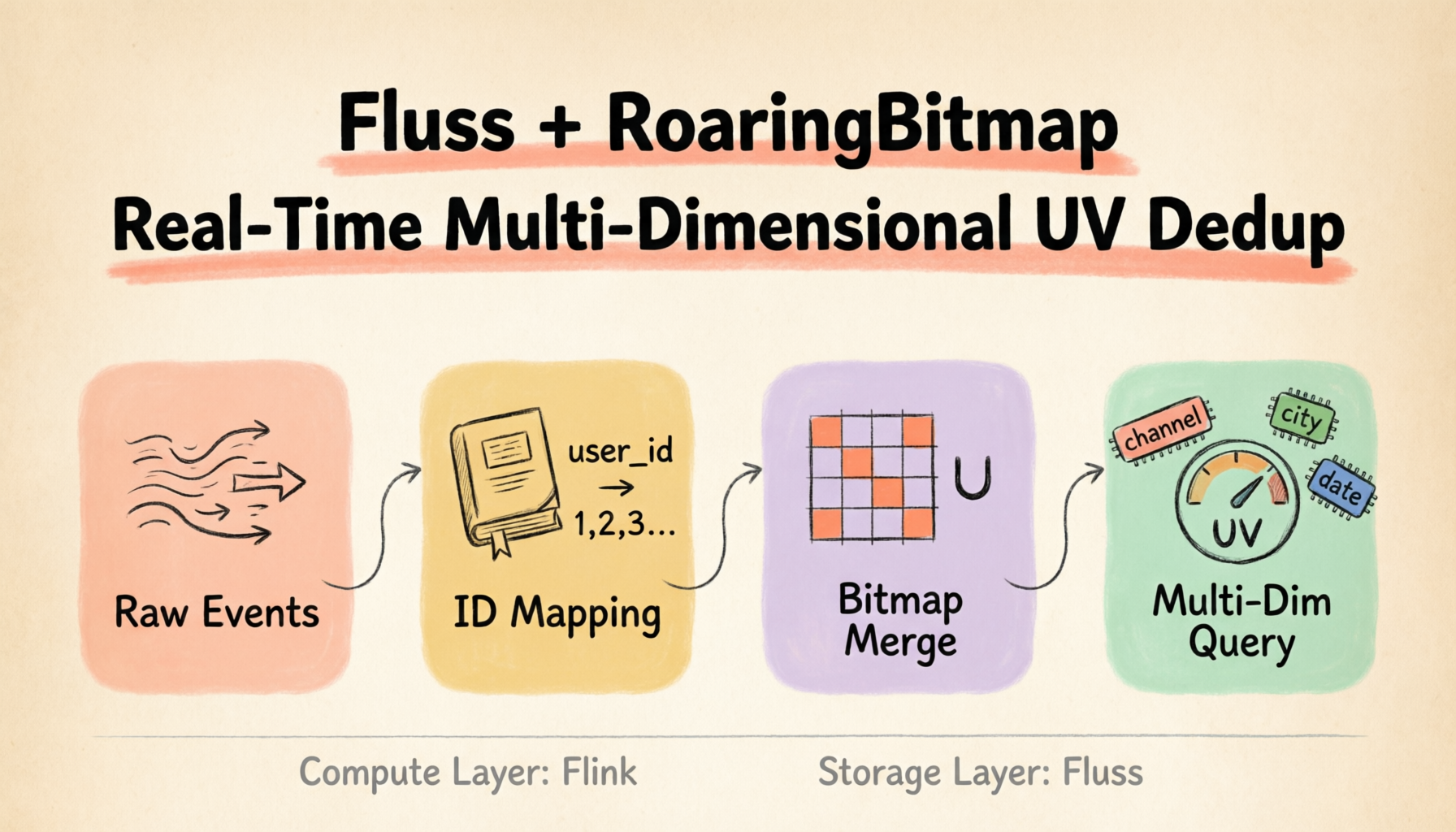
UV (Unique Visitors) measures the count of distinct users who visited a page or triggered an event within a given time window — unlike PV (Page Views), which counts every request regardless of who made it. For any product or platform, accurate real-time UV statistics across dimensions like channel, city, date, and hour are a core analytical requirement. The full combination of four dimensions means 16 grouping methods; when the dimension count increases to seven, the number of possible groupings reaches 128.

How can multi-dimensional deduplication be both accurate and flexible while maintaining real-time performance? Behind this challenge lie two very different computing paradigms: direct deduplication of raw data, or set operations based on bitmaps.

A fraud detection pipeline with Streamhouse

Jacopo Gardini
Big Data Engineer of Agile Lab SRL

Fraud detection is a mission-critical capability for businesses operating in financial services, e-commerce, and digital payments. Detecting suspicious transactions in real time can prevent significant losses and protect customers. This blog demonstrates how to build a streamhouse that processes bank transactions in real time, detects fraud, and serves data seamlessly across hot (sub‑second latency) and cold (minutes‑latency) layers. Real-time detection and historical analytics are combined, enabling businesses to act quickly while maintaining a complete audit trail.

From Stream to Lake: Hands-On with Fluss Tiering into Paimon on Minio

Yang Guo
Contributor of Apache Fluss

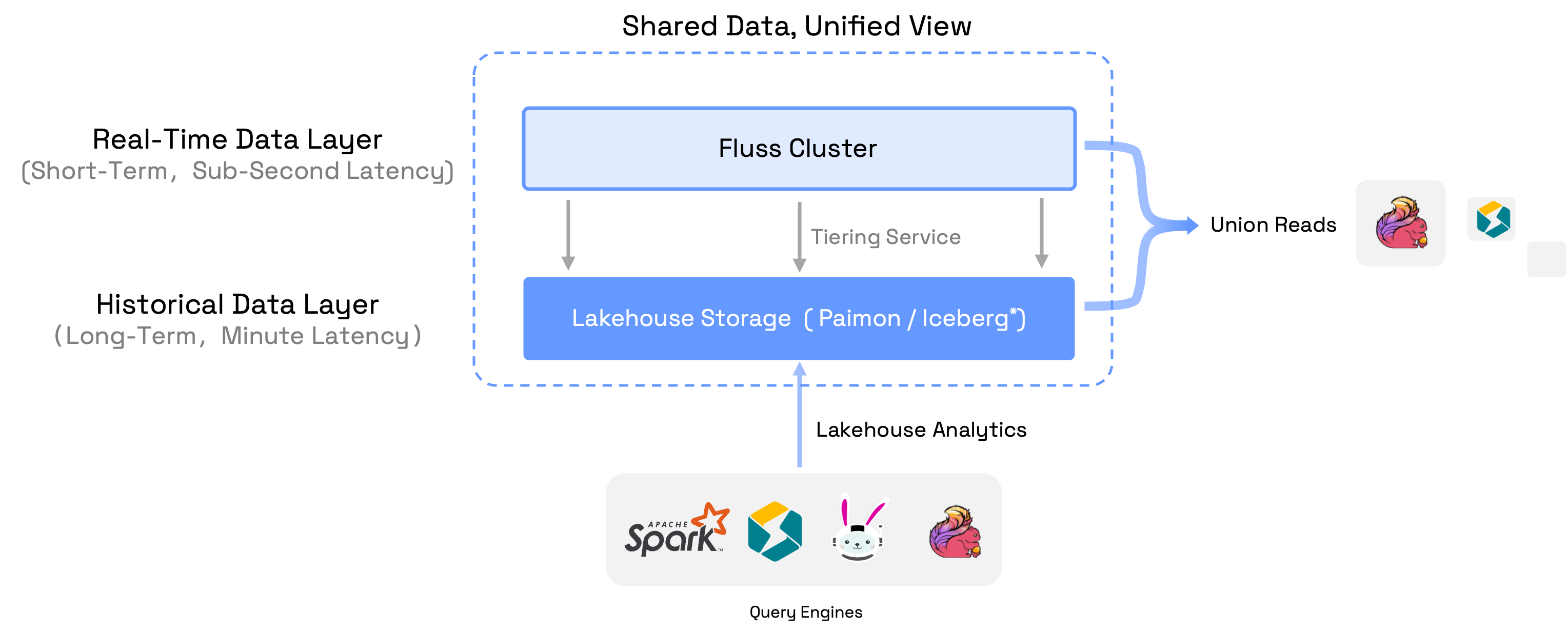
Fluss stores historical data in a lakehouse storage layer while keeping real-time data in the Fluss server. Its built-in tiering service continuously moves fresh events into the lakehouse, allowing various query engines to analyze both hot and cold data. The real magic happens with Fluss's union-read capability, which lets Flink jobs seamlessly query both the Fluss cluster and the lakehouse for truly integrated real-time processing.

In this hands-on tutorial, we'll walk you through setting up a local Fluss lakehouse environment, running some practical data operations, and getting first-hand experience with the complete Fluss lakehouse architecture. By the end, you'll have a working environment for experimenting with Fluss's powerful data processing capabilities.

Apache Fluss Java Client: A Deep Dive

Giannis Polyzos
PMC member of Apache Fluss

Banner

Introduction​

Apache Fluss is a streaming data storage system built for real-time analytics, serving as a low-latency data layer in modern data Lakehouses. It supports sub-second streaming reads and writes, storing data in a columnar format for efficiency, and offers two flexible table types: append-only Log Tables and updatable Primary Key Tables. In practice, this means Fluss can ingest high-throughput event streams (using log tables) while also maintaining up-to-date reference data or state (using primary key tables), a combination ideal for scenarios like IoT, where you might stream sensor readings and look up information for those sensors in real-time, without the need for external K/V stores.

Understanding Partial Updates

Giannis Polyzos
PMC member of Apache Fluss

Banner

Traditional streaming data pipelines often need to join many tables or streams on a primary key to create a wide view. For example, imagine you’re building a real-time recommendation engine for an e-commerce platform. To serve highly personalized recommendations, your system needs a complete 360° view of each user, including: user preferences, past purchases, clickstream behavior, cart activity, product reviews, support tickets, ad impressions, and loyalty status.

That’s at least 8 different data sources, each producing updates independently.